
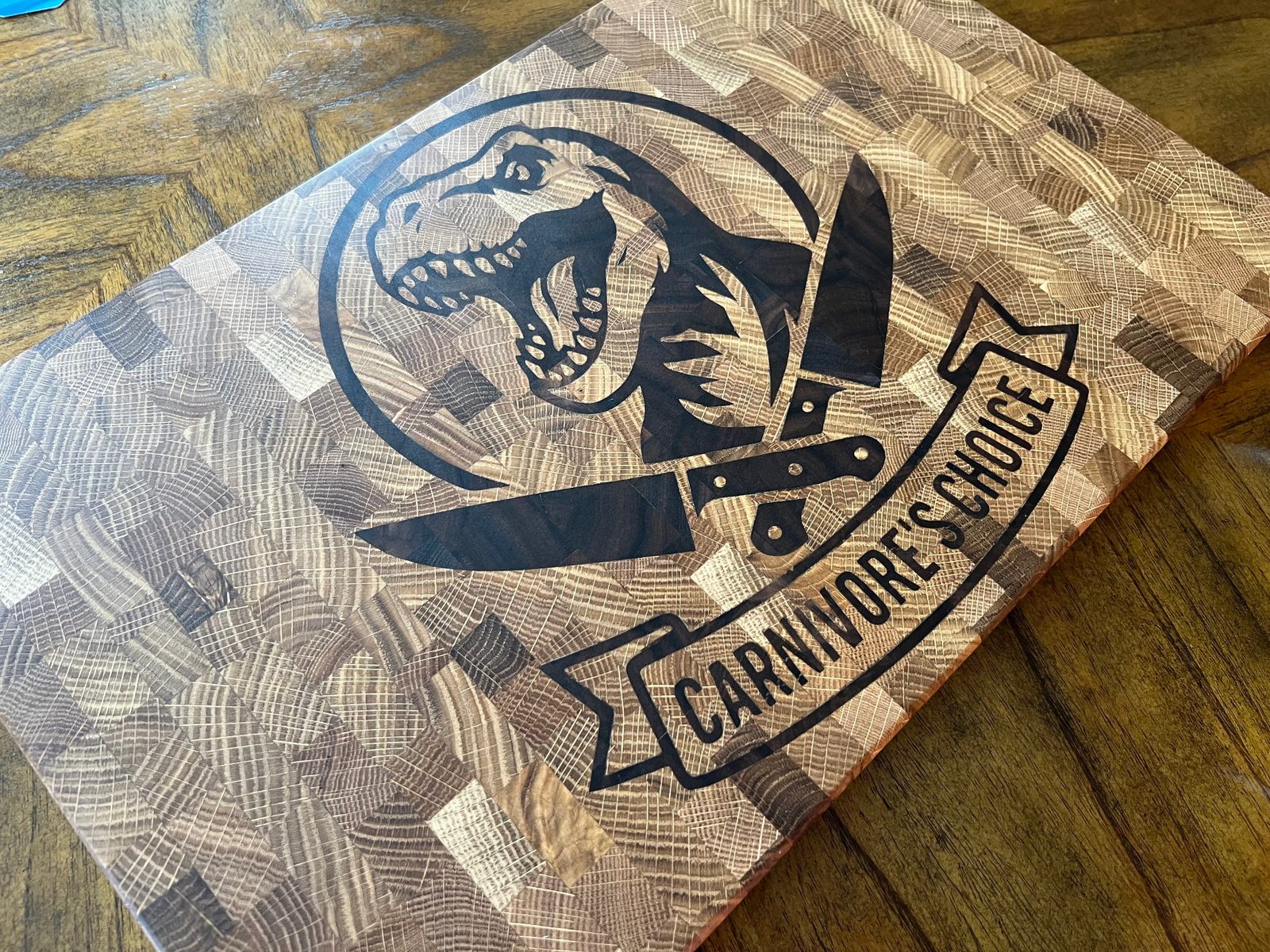
A well-made wooden cutting board can last for years—sometimes decades—if you take care of it. The rules are simple: don’t let it stay wet, keep it clean, and oil it often enough that the wood doesn’t dry out and crack.
Here’s the exact care routine I recommend for the hardwood boards I make at DJA Woodworks.
Quick Care Summary
If you only read one section, read this:
- After each use: Hand wash with mild soap + warm water, then wipe down immediately with a towel. Once towel dried as much as possible, I prefer to allow my boards to dry fully while standing on their long edge to allow even airflow to hit the top and bottom of the board. This helps to prevent warping.
- Never: Soak it, run it through the dishwasher, or leave it sitting wet in the sink. These conditions will certainly result in wood movement you do not want to happen. Twisting, warping, cracking. Just don’t do it.
- Oil it: When it looks dry (usually every 3–6 weeks, depending on use) This truly is the most subjective part of the whole process. It won’t hurt the board to oil it more often. Sometimes you can get away with longer oiling intervals if it’s not being used daily.
- Optional wax finish: After oiling for extra water resistance and a nicer feel
Daily Cleaning (After Each Use)
You’ll need: mild dish soap, warm water, sponge/brush, towel
- Rinse quickly with warm water (don’t hold it under running water forever—wood doesn’t love that).
- Wash with a little mild soap using a sponge or brush.
- Rinse, then dry right away with a towel.
- Stand it on edge or prop it up so both sides air-dry evenly.
Pro tip: Drying it on edge helps prevent warping because both faces dry at the same rate. This will save you headache and prevent an extra search for “How to fix a warped cutting board.”
Deep Cleaning / “Sanitizing” (When Needed)
You don’t need to sanitize a wood board after every use. This is something you may want to do after cutting raw meat, or foods with strong smells like garlic or onion. This is absolutely not necessary because a properly oiled and maintained board will not trap odors or liquids very effectively. This is what makes wood such a great cutting board material. If you feel it needs a little extra, the options below are both easy and safe for you and you’re cutting board.
Option A: White Vinegar (easy + food-safe)
- Spray or wipe a light coat of white vinegar over the surface
- Let it sit 5 minutes, then wipe and dry
Option B: 3% Hydrogen Peroxide (occasional use)
- Wipe on a light coat of 3% hydrogen peroxide
- Let it sit a few minutes, then wipe and dry
- Don’t soak the board—just a surface wipe
(Use peroxide occasionally, not every day.)
Removing Odors (Garlic, Onion, Fish)
- Sprinkle coarse salt over the board, then rub with half a lemon (or a little lemon juice).
- Let it sit 2–3 minutes, then scrape/wipe.
- Rinse quickly and dry.
- Once dry. Oil properly. A properly oiled board will not absorb odors as easily as a dry board.
This works well because salt helps lift residue and lemon helps neutralize odors. While this does work pretty effectively, there is a downside. What makes this work also makes this a little harsh on your cutting board’s finish. The acidic nature of lemon and the abrasive texture of salt may leave your finish feeling a bit fuzzy or rough. Only complete this process if you absolutely feel you must, and you are prepared to touch your board up with a little sandpaper (220 grit would do the trick, nothing lower than 220 for normal touch ups)
How to Oil a Cutting Board (And How Often)
Oiling keeps the wood from drying out and helps reduce cracking. It also fills the voids in the wood. This helps minimize what the wood is able to absorb.
How often?
Simple rule: oil it when it looks dry. It won’t hurt to oil it too much, but it can be harmful to oil it too little. If your board drys out, this leaves it susceptible to absorb liquids from foods at worst, but at best it’s absorbing moisture from the air which can cause wood movement and turn your beautiful, flat cutting into a wobbly, warped mess that won’t be as pleasant to use.
For most users that’s every 3–6 weeks. If you wash it a lot, it may be closer to every 2–4 weeks. If you have to question it, go ahead and oil your board.
What oil to use
Stick to a food-safe, non-drying oil, like:
- Mineral oil (the standard but not my favorite)
- Mineral oil will 100% work, but it just lacks the soft feel a cutting board oil will have. To me that’s important.
- A cutting-board oil made specifically for boards
- I use a cutting board oil in my finishing process. There are many out there but i prefer Walrus Oil. I’m not sponsored by them, nor have i ever even spoken to them, but i do love their product. It’s very affordable and pretty accessible these days. I’ve even seen it at Wal-Mart. If you don’t have a preferred oil already, give them a shot.
Do not use cooking oils like olive, vegetable, or canola—they can and will go rancid over time.
Oiling steps (10 minutes of work + soak time)
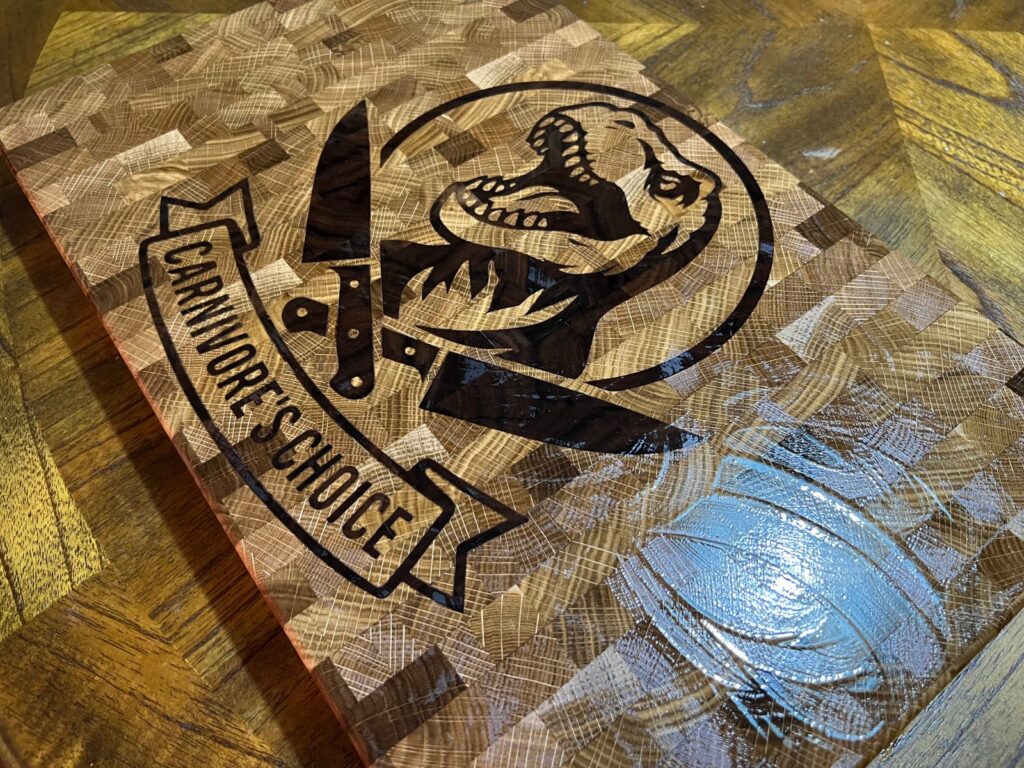
- Make sure the board is clean and fully dry.
- Apply oil generously to the top, bottom, and edges.
- Rub it in with gloved hands or a cloth, but make sure to leave enough to soak in if you’re using a cloth.
- Let it soak at least 3-4 hours. You really want to allow as much of the oil to absorb as possible, but after a point, the board will be saturated and no longer absorb oil.
- Wipe off any excess oil left after the soak.
Optional: Wax Finish for Extra Protection
After oiling, you can add a board wax (often mineral oil + beeswax) for extra water resistance and a smoother, more “finished” feel.
- Rub on a thin coat
- Let it sit for 10-15 minutes
- Buff it off with a cloth/towel
What NOT to Do (Biggest Board Killers)
- ❌ Dishwasher (heat + water = warping/cracks)
- ❌ Soaking in the sink
- ❌ Leaving it wet (or flat) on a wet countertop
- ❌ Microwave
- ❌ Harsh cleaners / bleach soaks (can damage the wood and finish but is also not food safe for you)
FAQ
Can I use vinegar every day?
You can, but you don’t need to. Mild soap + quick drying is plenty for daily use.
Why does my board feel rough again?
Moisture can raise the grain slightly. A quick hit with very fine sandpaper + re-oiling brings it right back. I would recommend 220 grit. It won’t take much to make it feel smooth again.
Is it normal for the color to change?
Yes, absolutey. Wood develops character over time and will patina and age beautifully. Oiling deepens the grain and typically makes it look richer.
Looking for a quality cutting board you can wash and oil?
If you’re looking for a cutting board that’s built to be used and built to last, you can see my handmade hardwood boards here:
Shop DJA Woodworks Cutting Boards →